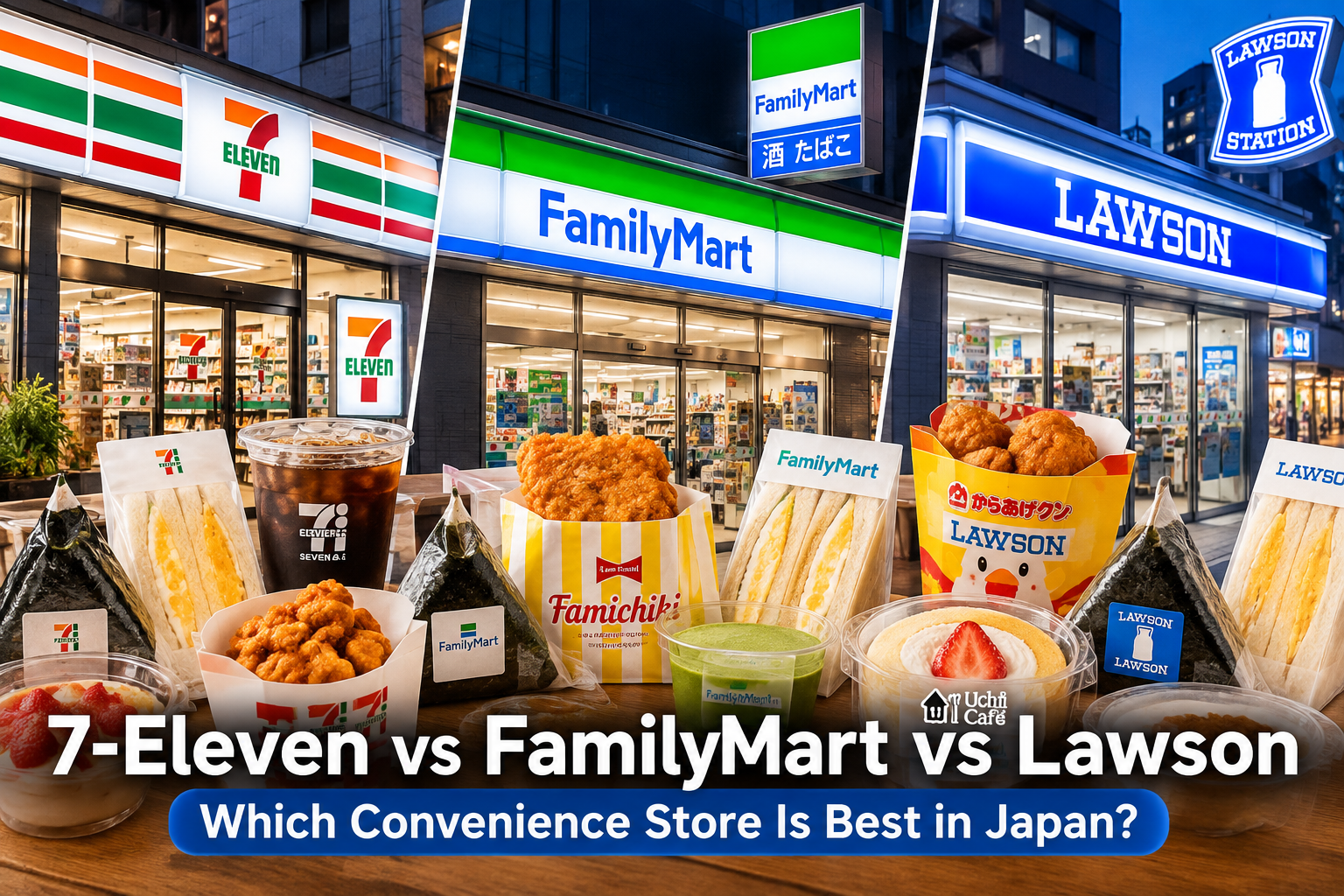
親記事:7-Eleven vs FamilyMart vs Lawson: Which Convenience Store Is Best in Japan?
目次
Introduction
I work as a bartender at a rock bar in Kyoto, and most of the people I talk to across the counter are travelers from overseas.
After a few drinks, the questions start coming. Where should I eat? Is it OK to tip? And one that comes up way more often than you’d expect:
“Which convenience store is the best in Japan?”“7-Eleven, FamilyMart, or Lawson?”
The first time someone asked me this, I didn’t have a good answer.
For Japanese people, convenience stores are just there. We go in for a drink, a rice ball, or to pay a bill, and we usually walk into whichever one is closest. Most of us never really sit down and think about which one is “the best.”
But talking with travelers every week, I realized something. For visitors, Japanese convenience stores (or “konbini”) are part of the trip itself. People plan to try Famichiki. They take photos of the onigiri shelf. Some even come back from the konbini more excited than from a temple.
So this article is my honest answer to that question, written the way I’d explain it at the bar.
Quick Answer
All three are good. They’re just good at different things.
There’s no single “best convenience store in Japan.” The basics (drinks, onigiri, sandwiches, snacks, ATMs, toilets in many stores) are covered everywhere. The differences show up in specific categories.
Known for
Good to check out
7-Eleven
The most stores, a big range of its own-brand food
Ready meals, everyday food, ATMs
FamilyMart
Hot snacks, especially Famichiki
Fried chicken, Convenience Wear socks
Lawson
Desserts and Karaage-kun
Uchi Café sweets, fried chicken bites
If you only remember one thing: go to whichever one is closest, and try all three during your trip. I’ll explain why at the end.
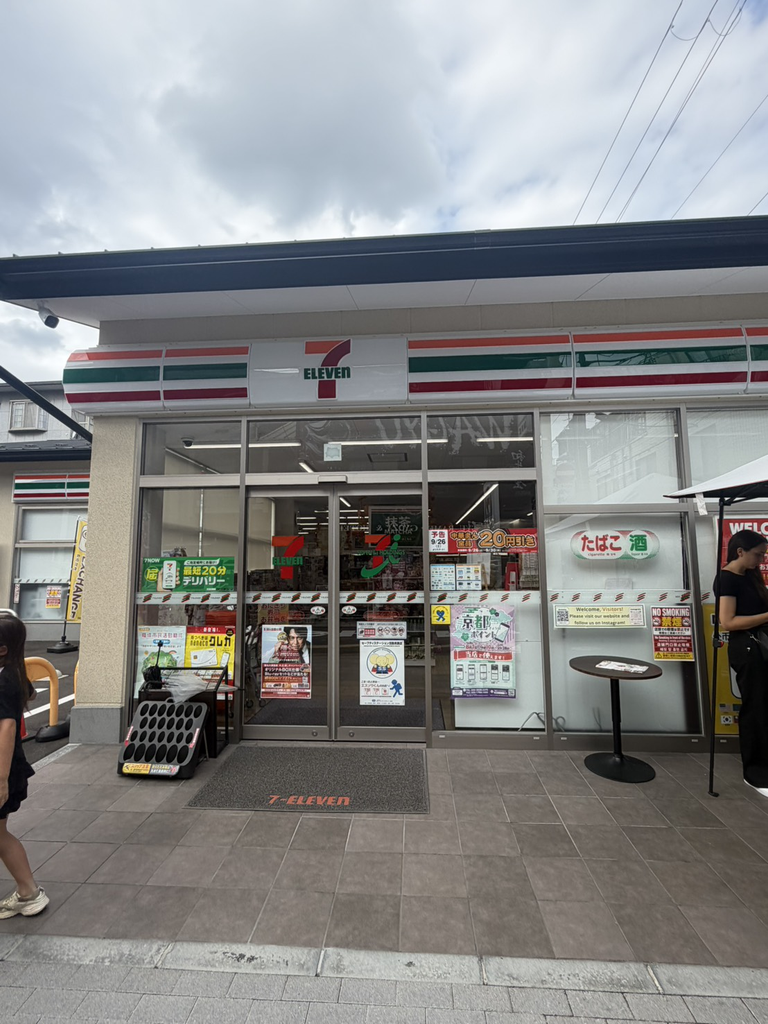
7-Eleven Japan
7-Eleven is the biggest convenience store chain in Japan, with over 21,000 stores. Yes, it’s the same brand you might know from home, but the Japanese version is a very different experience.
Why travelers like it
It’s everywhere. In most cities, you won’t walk long without seeing one.
ATMs that travelers can use. 7-Eleven stores have Seven Bank ATMs, which are well known among travelers for accepting many overseas cards. Handy if you need cash in Japan, where some small restaurants and bars are still cash only.
A huge range of its own-brand products (“Seven Premium”), from snacks to ready meals.
What to check out
Ready meals and bento boxes. A good option for a cheap, easy lunch or dinner.
Onigiri and sandwiches. The classic konbini lineup.
Fried chicken from the hot snack case near the register, like Nana-Chiki and Age-dori.
In Japan, 7-Eleven has a reputation for solid everyday food. If you just want something reliable to eat, it’s an easy place to start.
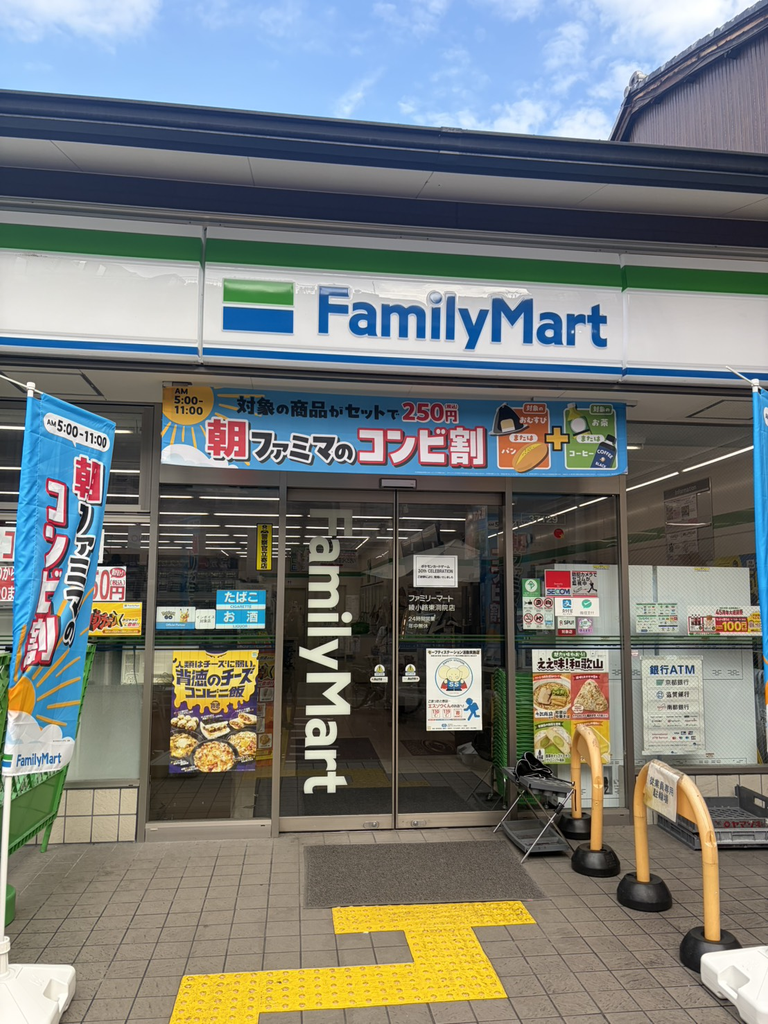
FamilyMart Japan
FamilyMart (“Famima”) is the second-largest chain, with around 16,000 stores. You’ll recognize it by the green, white and blue sign, and the jingle that plays when you walk in.
Hot snacks and Famichiki
If there’s one thing FamilyMart is famous for overseas, it’s Famichiki, a boneless, juicy fried chicken sold from the warm case next to the register.
At my bar, it’s the konbini food travelers mention by name more than anything else. A lot of people come to Japan already knowing they want to try it.
There’s also a spicy version, Famichiki Red, if you like heat.
I actually compared the fried chicken from all three convenience stores, including Famichiki. You can read the full comparison here.
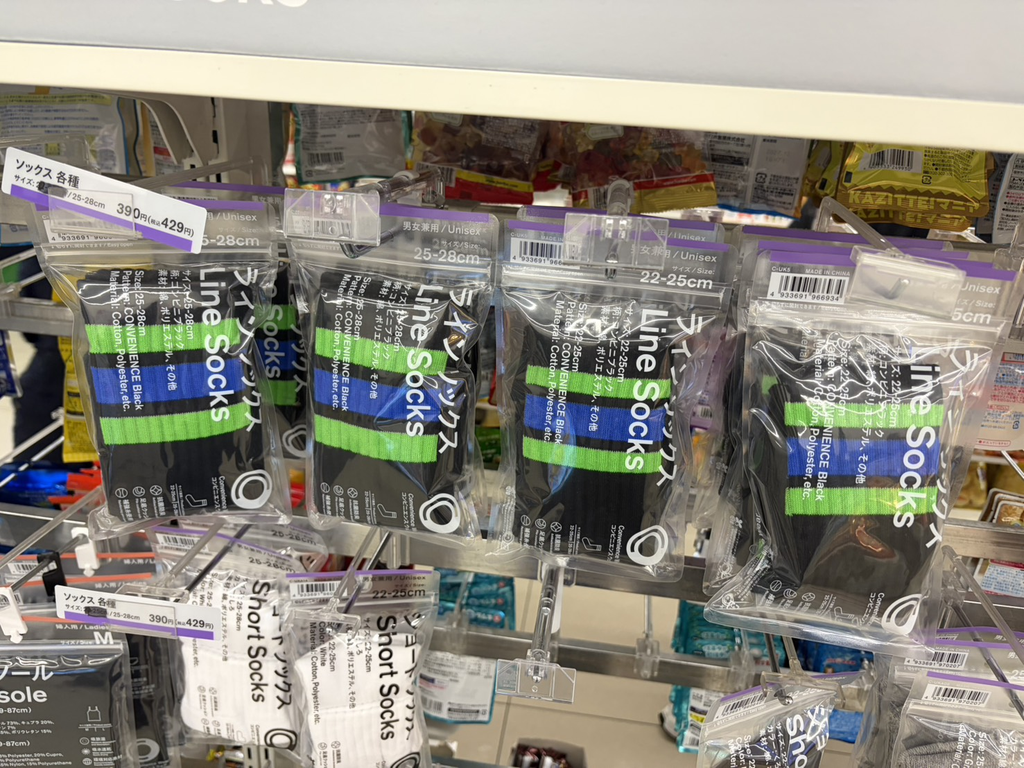
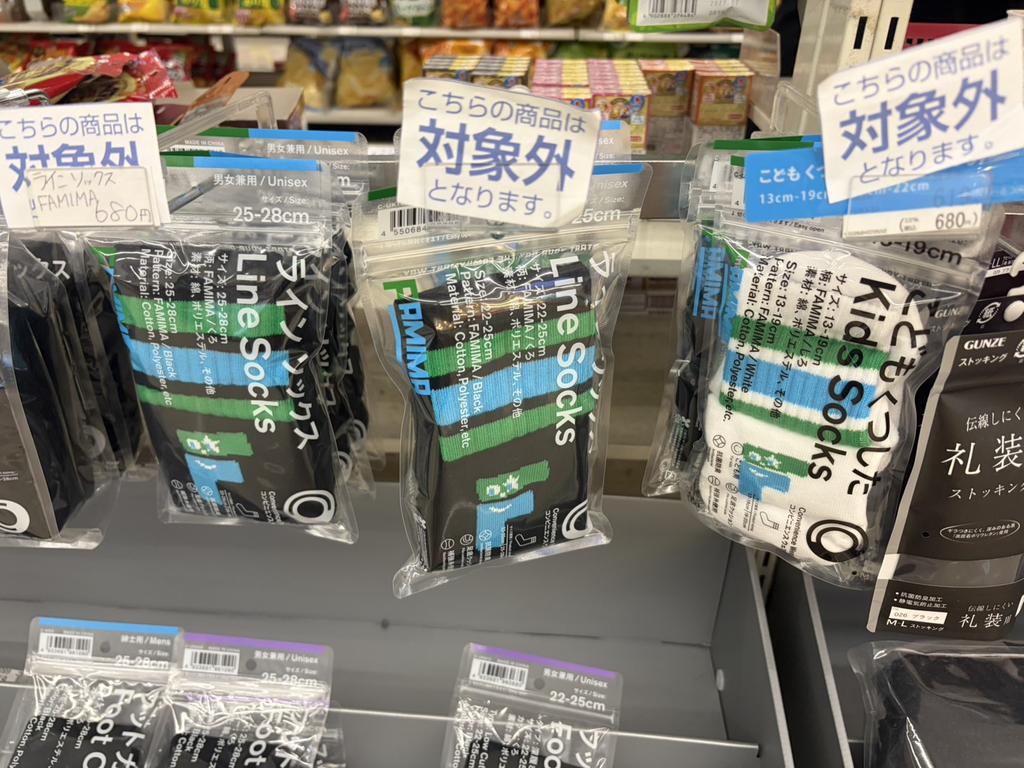
FamilyMart also sells its own clothing line, Convenience Wear. The striped socks in FamilyMart’s colors have become a popular (and cheap) souvenir with travelers. Not what you’d expect to buy at a convenience store, but that’s kind of the fun.
Lawson Japan
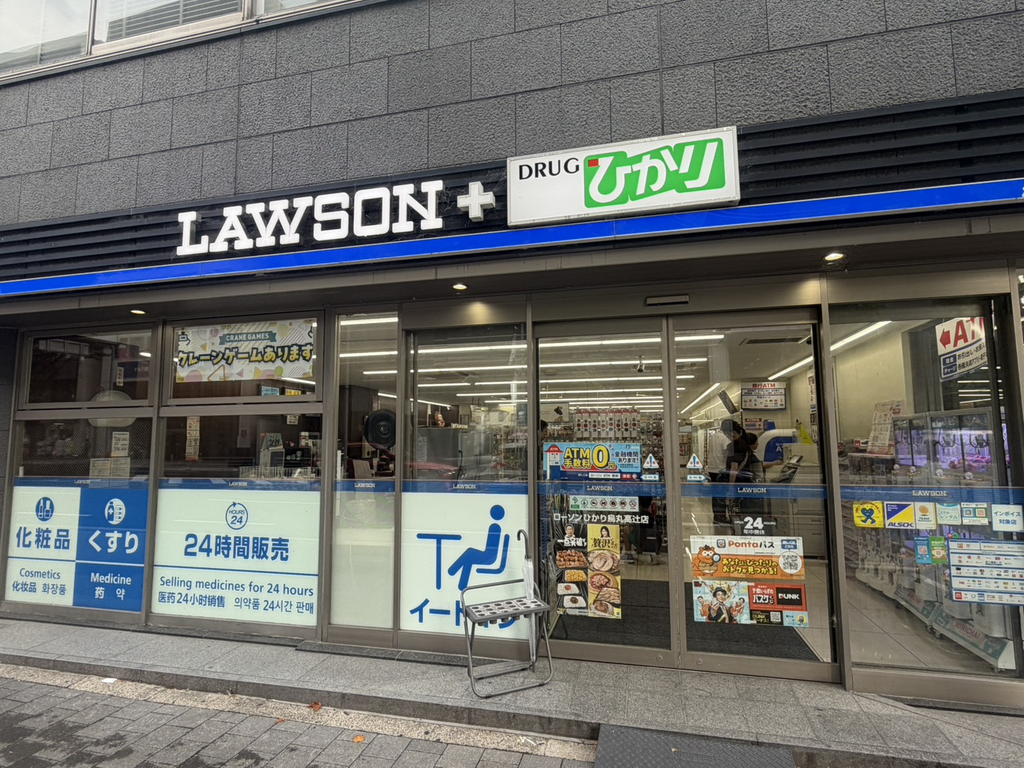
Lawson is the third of the big three, with around 14,000 stores. Look for the blue sign with a milk bottle logo.
Karaage-kun
Lawson’s signature hot snack is Karaage-kun: bite-sized fried chicken in a small box. It’s been around for decades, and the box with its little mascot is easy to spot at the register. Good for sharing, and easy to eat while walking around.
Desserts
Lawson has its own dessert brand, Uchi Café, and sweets are a big part of its identity. If you’re the kind of traveler who hunts for desserts, Lawson’s dessert shelf is worth a look.
Good to know
Natural Lawson (the purple sign) is a health-focused version of Lawson with a different product lineup. Some regular Lawson items, like Karaage-kun, aren’t sold there.
Lawson Store 100 is a budget version with a different concept again.
So if you’re looking for something specific, head to a regular blue Lawson.
7-Eleven vs FamilyMart vs Lawson: The Differences by Category
Here’s a quick comparison of the things travelers actually care about.
Category
7-Eleven
FamilyMart
Lawson
Food in general
Big range of own-brand ready meals
Wide range, strong on hot food
Wide range, strong on desserts
Fried chicken
Nana-Chiki, Age-dori
Famichiki (the famous one)
L-Chiki, Karaage-kun
Onigiri
All three have a wide range
All three have a wide range
All three have a wide range
Egg sandwich
Yes
Yes
Yes (a famous one)
Desserts
Wide range
Wide range
Uchi Café dessert brand
Hot snacks
Fried chicken and more
Famous for them
Karaage-kun and more
A few notes:
Onigiri and egg sandwiches are staples at every konbini. The differences come down to fillings, texture and personal taste, so I’ll compare them properly in separate articles.
Hot snack lineups change with the season. In the colder months, you’ll also see things like steamed buns (nikuman) and, at many stores, oden.
What Food Should You Try?
If it’s your first time in a Japanese konbini, here’s where I’d start:
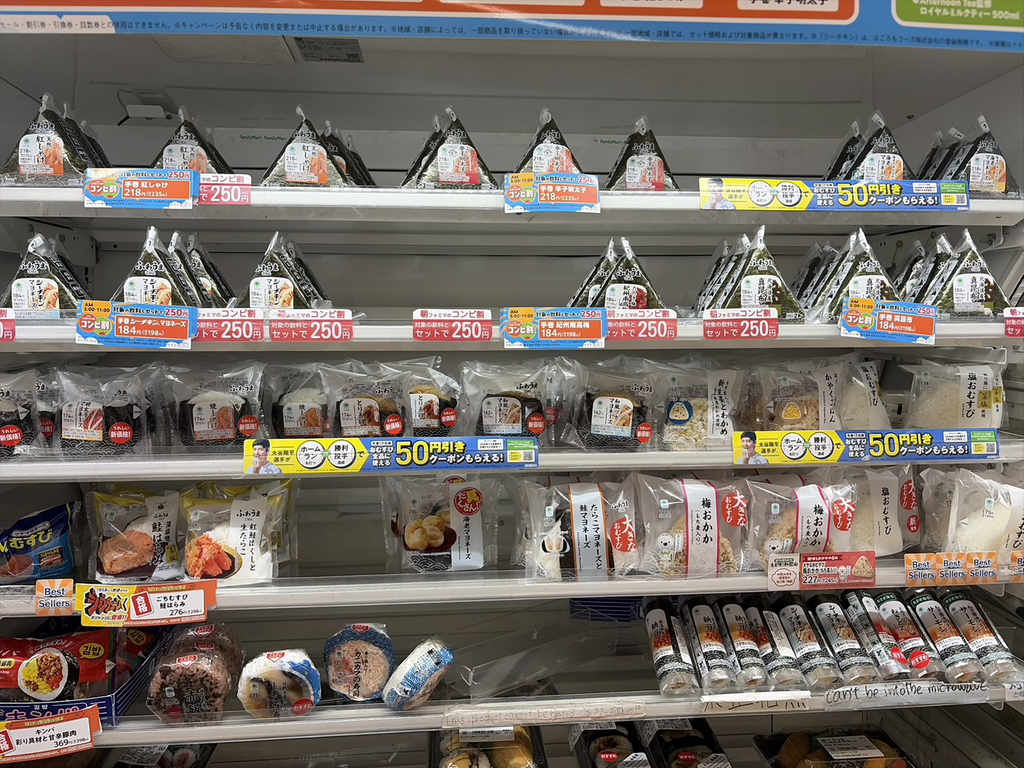
Onigiri (rice balls): cheap, filling and very Japanese
Egg sandwich (tamago sando): soft bread with a creamy egg filling
Fried chicken from the hot snack case
Desserts, like pudding or cream-filled sweets
Drinks: bottled green tea, and the self-service coffee most stores have
Most of these cost less than a drink at a bar, so it’s an easy, low-risk way to try Japanese food.
I’ve put together a longer list of konbini foods I’d recommend to first-time visitors. 【Internal Link: 10 Best Japanese Convenience Store Foods You Have to Try】
What About Onigiri?
Onigiri is probably the most “Japanese” thing you can buy at a konbini. The problem is that many labels are only in Japanese, and even when you can read the name, it’s hard to imagine the taste.
Here are a few common fillings:
Tuna mayo: tuna mixed with Japanese mayonnaise. Easy to like, and a safe first choice.
Ume: a pickled Japanese plum. Very sour and salty. Some people love it, some people don’t.
Kombu: kelp simmered in soy sauce and sugar. Sweet and savory, with a soft texture.
The plastic wrapper can also be confusing the first time. The numbers printed on it show the order to pull the tabs, which keeps the seaweed crispy.
If you want to know which onigiri to try first, and what’s different between the stores, check out my onigiri guide. 【Internal Link: Best Japanese Convenience Store Onigiri】
What About Japanese Egg Sandwiches?
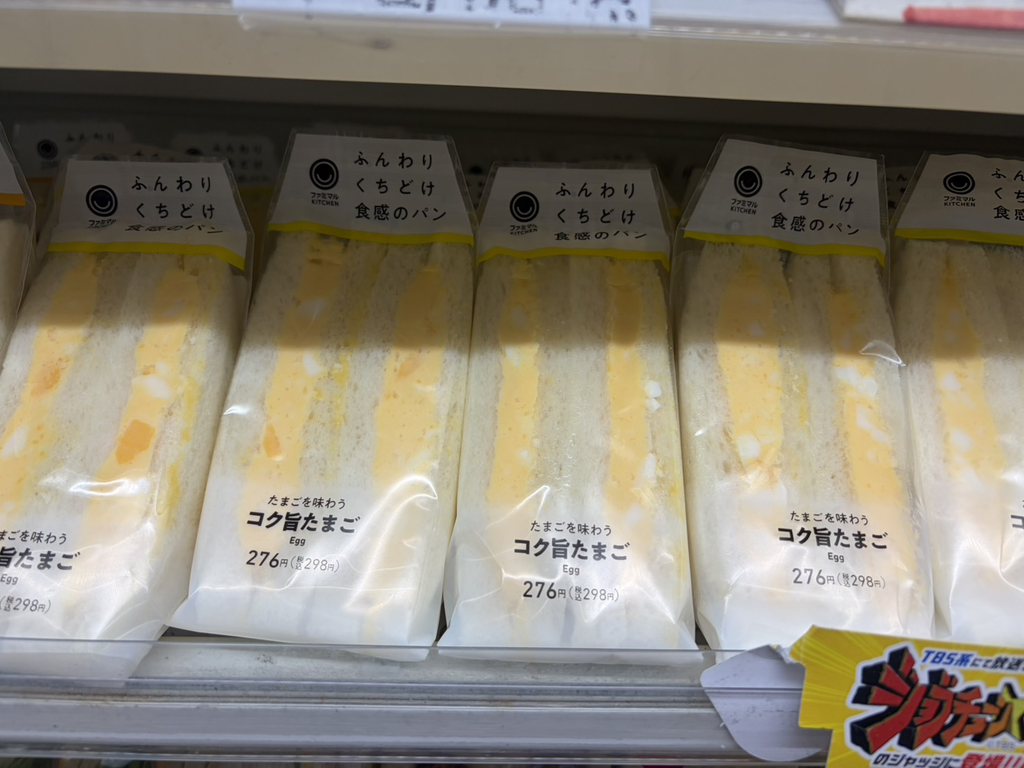
The Japanese egg sandwich (tamago sando) has become a bit of a cult favorite with travelers. It’s usually soft white bread with no crust and a creamy egg salad filling.
Lawson’s version got a lot of attention overseas after the late chef Anthony Bourdain talked about how much he loved it. But 7-Eleven and FamilyMart sell their own versions too, and the differences between them are a good topic for a separate article.
I’ll compare the egg sandwiches from all three stores in a separate article. 【Internal Link: Best Japanese Convenience Store Egg Sandwich】
Which Convenience Store Has the Best Fried Chicken?
This is one topic where I’ve done the homework myself.
Each store has its own signature fried chicken:
7-Eleven: Nana-Chiki and Age-dori
FamilyMart: Famichiki (and the spicy Famichiki Red)
Lawson: L-Chiki and Karaage-kun
Most travelers know Famichiki, and it deserves its reputation. But in my opinion, 7-Eleven and Lawson have fried chicken that’s just as worth trying, and many people go home without ever tasting it.
I actually compared the fried chicken from all three convenience stores. You can read the full comparison, including which ones I’d pick, here.
Instead of a ranking, here’s how I’d think about it depending on what you want.
Your first konbini experience
Any of the three. Honestly. Walk into the nearest one, look around, and buy an onigiri and a drink. That alone tells you a lot about Japanese convenience stores.
You want hot snacks
Check the case next to the register at all three. FamilyMart is famous for Famichiki, Lawson has Karaage-kun, and 7-Eleven has its own fried chicken. If you’ve heard of Famichiki and want to try it, that’s a good reason to go to FamilyMart.
You’re looking for desserts
Lawson is worth a visit for its Uchi Café dessert brand. That said, 7-Eleven and FamilyMart also have big dessert sections, so look at whatever’s near you too.
You need breakfast
The nearest one. Onigiri, sandwiches, yogurt and coffee are available everywhere. In the morning, convenience and distance matter more than the brand.
You want a late-night snack at your hotel
Again, the closest one. Most konbini are open 24 hours. Grab a snack, a drink, or even a ready meal. If you buy something that needs heating, the staff can often warm it up for you at the register.
Don’t Overthink It
This is probably the most useful advice in this whole article.
In Japan, you’ll see all three convenience stores constantly. In cities like Tokyo, Osaka and Kyoto, there’s often one on the next corner, and sometimes two across the street from each other.
So there’s no need to walk 15 minutes to find a FamilyMart when there’s a Lawson right in front of you. Just go into the nearest one. Every konbini has something good to eat.
And if you want to make it fun: try all three during your trip and decide on your own favorite. It’s cheap, it’s easy, and I think it’s one of the small joys of traveling in Japan.
A couple of practical tips while you’re at it:
Trash bins can be hard to find on the street in Japan. Many konbini have bins, so it’s a good place to throw away your trash (from things you bought there).
Card and IC card payments are widely accepted. Most stores take credit cards and transit cards like Suica or ICOCA.
Final Thoughts
There’s no single best convenience store in Japan. Each one is good at different things.
7-Eleven Japan: the most stores, a wide range of everyday food, and ATMs travelers can use
FamilyMart Japan: hot snacks, especially Famichiki, plus Convenience Wear
Lawson Japan: Karaage-kun and desserts
Don’t overthink it. Go to the closest one, and try all three during your trip.
For Japanese people, the konbini is just part of daily life. But I love that travelers see it with fresh eyes. It reminds me that even the most ordinary places here can be part of the adventure.
So, what about you? 7-Eleven, FamilyMart, or Lawson? If you’re ever in Kyoto, come by the bar and tell me which one won. I’m always curious to hear the answer.
More from “Japanese Convenience Stores”
【Internal Link: 10 Best Japanese Convenience Store Foods You Have to Try】
【Internal Link: Best Japanese Convenience Store Onigiri】
【Internal Link: Best Japanese Convenience Store Egg Sandwich】
【Internal Link: Best Japanese Convenience Store Fried Chicken】