
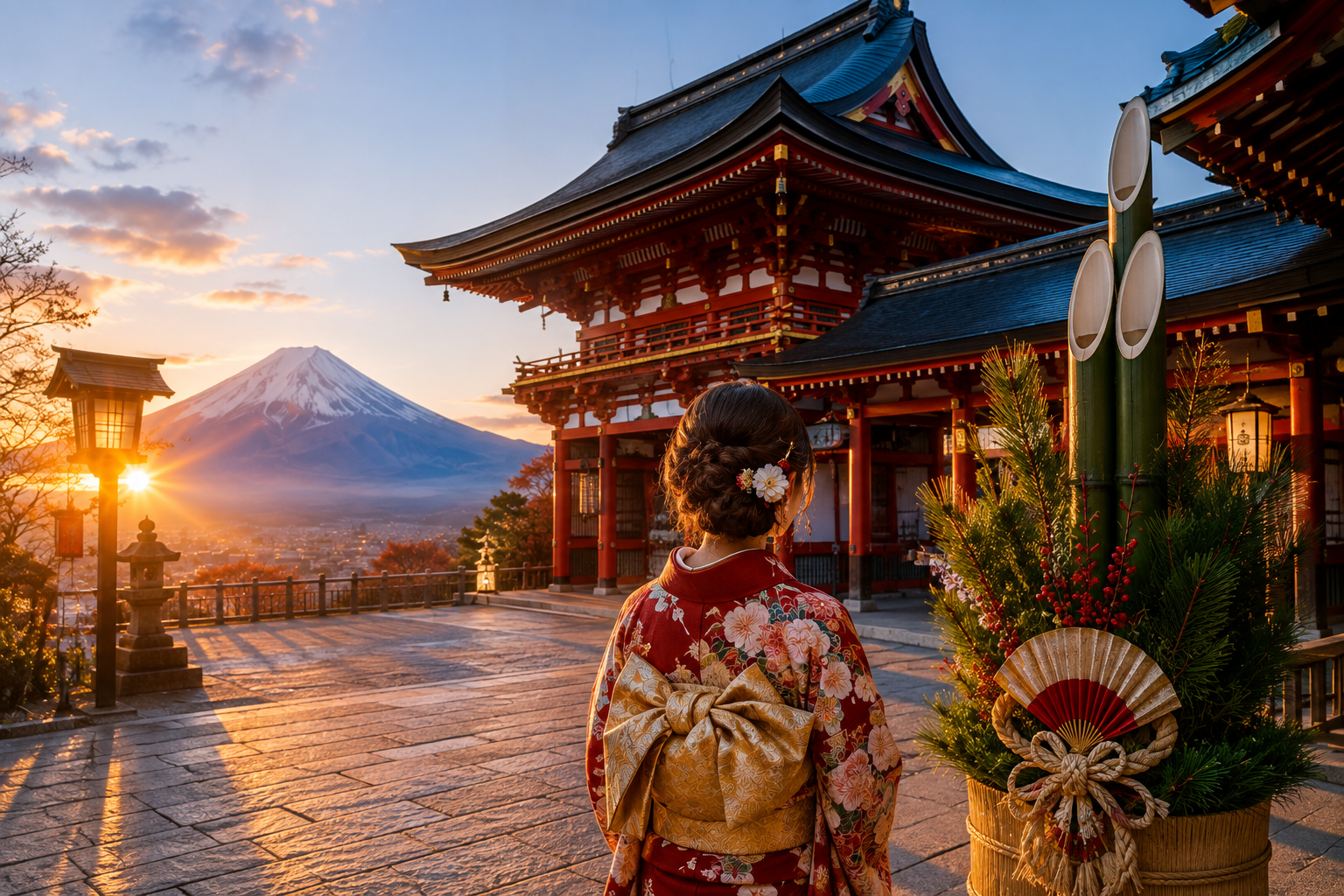
Introduction
If you’re planning to visit Japan during the New Year’s holiday, you may notice that the atmosphere feels very different from the rest of the year.
Many travelers wonder:
- Is New Year a good time to visit Japan?
- Are shops and restaurants open?
- What traditions do Japanese people celebrate?
- Will transportation be crowded?
New Year is the most important holiday in Japan.
Unlike Christmas, which is often celebrated as a romantic occasion, New Year is a time when families gather, traditional customs are observed, and people welcome the beginning of a new year.
If you’re planning to visit Japan during this period, understanding what to expect will help you enjoy your trip much more.
When Is the New Year’s Holiday?
The official New Year’s Day holiday is January 1.
However, for many Japanese people, the holiday period generally lasts from:
December 29 to January 3
Many companies, schools, and government offices close during this time.
Because millions of people travel to visit their hometowns or take vacations, it becomes one of the busiest travel seasons of the year.
Why Is Japan So Crowded During New Year?
Just like Obon, many Japanese people return to their hometowns to spend time with their families.
Others travel around Japan during the holiday.
As a result:
- Shinkansen trains become fully booked.
- Domestic flights are extremely busy.
- Highways experience heavy traffic.
- Hotels in popular destinations fill up quickly.
If you’re planning to travel between cities during this period, booking transportation and accommodations well in advance is highly recommended.
Are Shops and Restaurants Open?
This depends on the type of business.
Unlike many other countries, convenience stores remain open throughout the New Year’s holiday.
However, you may find that:
- Small family-owned restaurants are closed.
- Local cafés take several days off.
- Some tourist attractions have special holiday schedules.
- Government offices and banks are usually closed.
On the other hand, many department stores and shopping malls reopen on January 2 or January 3 with special New Year’s sales, attracting large crowds of shoppers.
Hatsumode – Japan’s First Shrine Visit
One of Japan’s oldest New Year’s traditions is Hatsumode, the first visit to a shrine or temple in the new year.
Millions of people visit shrines to:
- Pray for good health.
- Wish for success at school or work.
- Pray for happiness and good fortune.
- Buy lucky charms (Omamori).
- Draw fortune slips (Omikuji).
Some of Japan’s most famous shrines receive several million visitors during the first few days of January.
For many Japanese people, Hatsumode is an essential part of welcoming the new year.
Traditional New Year’s Foods
New Year is also an important time for traditional Japanese food.
Some of the most popular dishes include:
- Osechi Ryori – A variety of traditional dishes served in decorative boxes.
- Ozoni – A soup containing mochi (rice cake).
- Toshikoshi Soba – Buckwheat noodles eaten on New Year’s Eve to symbolize a long and healthy life.
Many families prepare or purchase these special dishes only once a year.
For visitors, trying New Year’s cuisine is a great way to experience Japanese culture.
Is New Year a Good Time to Visit Japan?
Yes—but it depends on your travel style.
Advantages
- Experience authentic Japanese traditions.
- Visit beautiful shrines and temples during Hatsumode.
- Enjoy New Year’s decorations throughout the country.
- Experience one of Japan’s most important cultural celebrations.
- Take advantage of New Year’s sales at department stores.
Disadvantages
- Transportation is extremely crowded.
- Many small businesses are closed.
- Hotels become more expensive.
- Restaurant choices may be limited during the first few days of January.
If you enjoy cultural experiences, New Year can be one of the most fascinating times to visit Japan.
My Personal Advice
As someone who lives in Kyoto, I personally think New Year’s is one of the most unique times to experience Japanese culture.
However, it’s probably not the best time if your main goal is sightseeing.
Many famous tourist attractions remain open, but some restaurants, local cafés, and small shops close for several days.
If you’re planning to visit Japan during the New Year’s holiday, I recommend spending time at shrines and temples, where you can experience traditions that are only seen once a year.
At the same time, try not to schedule too many long-distance trips between cities.
Transportation is often the most stressful part of traveling during this period.
How I Spend New Year’s in Japan
Personally, I spend New Year’s almost every year relaxing with my mother’s side of the family.
Of course, every family celebrates differently, but I feel that many Japanese people spend the holiday in a similar way—enjoying quiet time with their family and relatives before heading to shopping malls to buy Fukubukuro (lucky bags) during the New Year’s sales.
Unlike holidays that are mainly about traveling or sightseeing, New Year’s in Japan is generally a time to slow down and spend meaningful time with loved ones.
New Year’s, like Obon, is one of the few times of the year when people from a wide variety of professions are able to take an extended holiday.
For example, one of my friends works as a professional chef, and the only long vacations he receives each year are during Obon and the New Year’s holiday.
Because so many people are off work at the same time, transportation and tourist destinations become extremely crowded.
For that reason, I personally don’t recommend planning a trip that involves constantly traveling from place to place during this period.
Instead, if you visit Japan over New Year’s, I think you’ll have a much more enjoyable experience by staying in one area, taking things slowly, and experiencing the unique traditions that make this holiday so special.
Don’t Miss Fukubukuro (Lucky Bags)
One of Japan’s most exciting New Year’s traditions is Fukubukuro, or lucky bags.
Many department stores and popular brands sell sealed bags containing mystery items at heavily discounted prices.
Some lucky bags are worth several times more than their selling price.
Because of this, many Japanese people line up early in the morning before stores open on January 2 or January 3.
If you enjoy shopping, buying a Fukubukuro can be a fun way to experience a uniquely Japanese New Year’s tradition.
Travel Tips
If you’re visiting Japan during the New Year’s holiday, these tips will help make your trip more enjoyable:
- Reserve hotels several months in advance.
- Book Shinkansen and domestic flights as early as possible.
- Expect crowds at major shrines and temples.
- Check holiday opening hours before visiting restaurants or attractions.
- Carry some cash, as some smaller businesses may not accept credit cards.
- Avoid unnecessary long-distance travel between December 29 and January 3 whenever possible.
Planning ahead is the best way to enjoy Japan during its busiest holiday season.
Final Thoughts
New Year’s is the most important holiday in Japan.
It is a time when families come together, traditional customs are celebrated, and people welcome a fresh start to the year.
Although transportation can be crowded and some businesses close temporarily, visiting Japan during New Year’s offers a unique opportunity to experience traditions that most tourists never see.
From Hatsumode at historic shrines to enjoying traditional New Year’s food and shopping for lucky bags, the holiday provides a fascinating look into Japanese culture.
If you don’t mind planning ahead and traveling with a little extra patience, New Year’s can become one of the most memorable parts of your trip to Japan.