
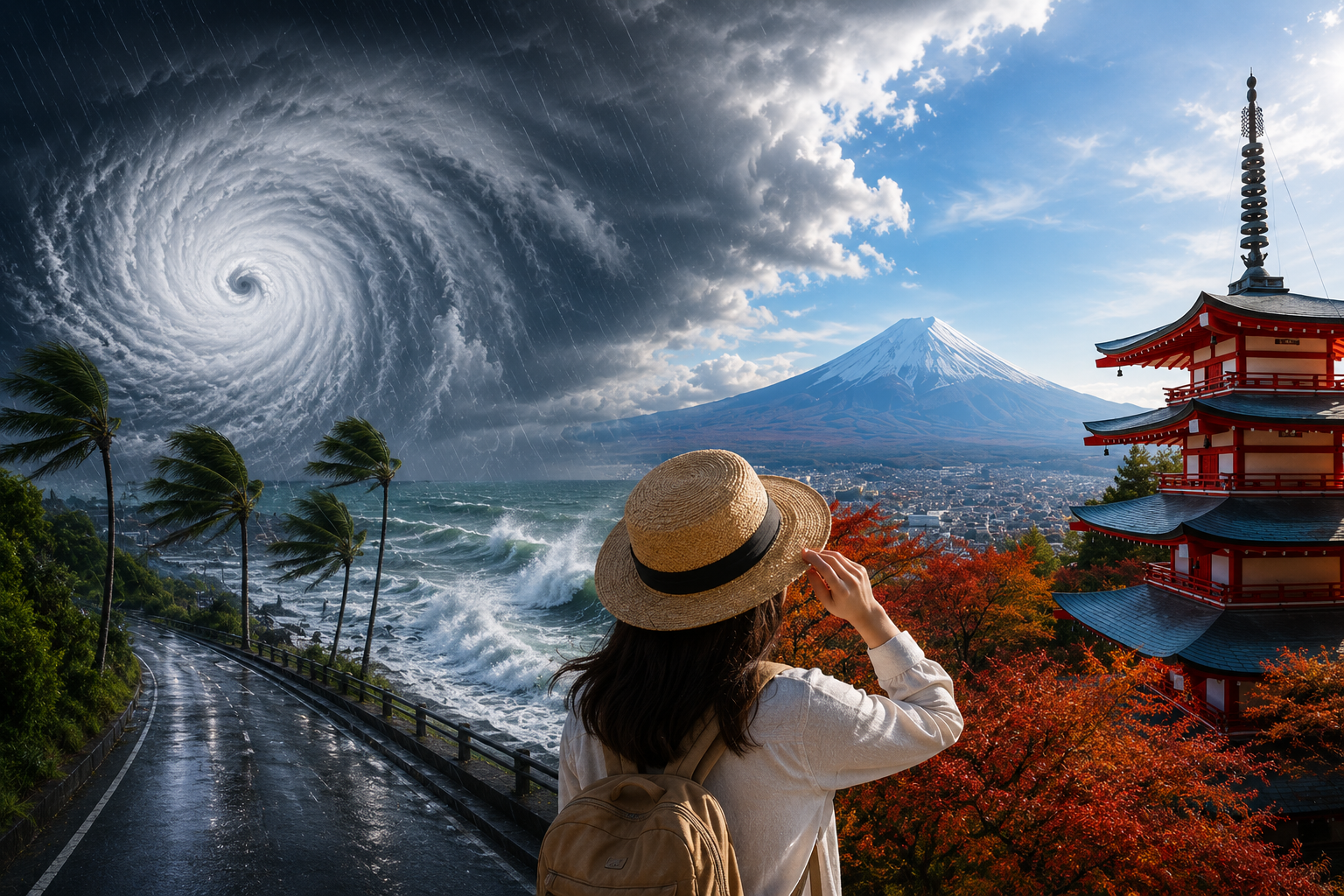
Introduction
If you’re planning to visit Japan between August and October, you may hear about typhoons in the weather forecast.
Many travelers wonder:
- Should I cancel my trip?
- Is Japan safe during a typhoon?
- Will trains and flights be canceled?
The good news is that most trips to Japan are not seriously affected by typhoons.
However, it’s important to understand what to expect and how to prepare.
This guide explains everything tourists need to know before traveling to Japan during typhoon season.
When is Typhoon Season in Japan?
Japan’s typhoon season generally lasts from:
August to October
The highest number of typhoons usually occurs in September.
Not every typhoon makes landfall, and many weaken before reaching Japan.
Even during peak season, many days have beautiful weather.
Should You Cancel Your Trip?
Usually, no.
Most travelers can enjoy their vacation without major problems.
Typhoons typically affect an area for only one or two days.
Unless a very strong typhoon is forecast to directly impact your destination, there is usually no need to cancel your trip.
Many tourists visit Japan every September without experiencing any typhoons at all.
How Do Typhoons Affect Travel?
If a strong typhoon approaches, you may experience:
- Flight delays or cancellations
- Shinkansen delays or temporary suspensions
- Ferry cancellations
- Strong winds
- Heavy rain
- Temporary closure of outdoor attractions
Most indoor attractions, shopping malls, museums, and department stores reopen quickly once the storm passes.
Is Japan Safe During a Typhoon?
Yes.
Japan is one of the world’s best-prepared countries for natural disasters.
Weather forecasts are highly accurate, and transportation companies announce schedule changes well in advance.
Hotels, train stations, airports, and convenience stores continue providing information throughout the storm.
The most important thing is to follow official advice and avoid unnecessary travel when severe weather is expected.
My Personal Advice
From my personal experience, I don’t recommend visiting Okinawa during Japan’s typhoon season, especially in September.
The reason is simple. Most typhoons that affect Japan develop over the warm ocean south of the country. They typically move northward, passing Okinawa first, then Kyushu, and finally Honshu. Because of this, Okinawa often experiences the strongest winds and heaviest rain before the typhoon begins to weaken.
My mother lived in Okinawa when she was younger, and she often told me how seriously local residents prepare for typhoons. People take extensive precautions to protect their homes from severe winds, and when a powerful typhoon makes a direct hit, going outside is often simply not an option.
Although many Japanese people love visiting Okinawa during the hot summer months, experienced travelers often choose to visit slightly before or after the peak typhoon season, such as June or November.
Not only are flights and hotels usually cheaper during these months, but there’s also a much lower chance that your travel plans will be ruined by a typhoon.
How to Prepare
If you’re visiting during typhoon season:
- Check the weather forecast every day.
- Keep your phone charged.
- Carry a portable charger.
- Allow extra travel time.
- Purchase travel insurance before your trip.
- Follow announcements from airlines and railway companies.
Preparation is usually all that’s needed.
What Should You Do If a Typhoon Hits?
If a typhoon is approaching:
Stay indoors whenever possible.
Avoid rivers, beaches, mountains, and coastal areas.
Listen to announcements from your hotel.
If transportation is suspended, wait until services resume rather than trying to travel.
Most typhoons pass within a day.
Useful Apps and Websites
Before and during your trip, these resources can help:
- Japan Meteorological Agency (JMA)
- NHK World Japan
- Google Maps
- Airline websites
- JR railway websites
These provide the latest weather forecasts and transportation updates.
Travel Tips
- September is still an excellent time to visit Japan.
- Flexible travel plans are helpful during typhoon season.
- Book accommodations with reasonable cancellation policies if possible.
- Keep some cash with you in case electronic payment systems are temporarily unavailable.
- Don’t panic—most typhoons cause only short-term disruptions.
Final Thoughts
Typhoon season may sound worrying, but for most travelers, it has only a small impact on their trip.
Japan has excellent weather forecasting, reliable emergency information, and well-organized transportation systems.
By checking the forecast and staying flexible, you can still enjoy an amazing trip—even during typhoon season.
If you’re visiting Japan between August and October, being prepared is the best way to travel with confidence.