
Introduction
If you’re planning to visit Japan between May and July, you may hear people talking about the rainy season, known in Japanese as Tsuyu (梅雨).
Many travelers wonder:
- What is Japan’s rainy season?
- Does it rain every day?
- Is June a bad time to visit Japan?
The good news is that Japan’s rainy season is often much better than many visitors expect.
Although rainfall increases during this period, it doesn’t usually rain all day, every day. In fact, there are still plenty of sunny days, making it entirely possible to enjoy your trip.
Understanding Japan’s rainy season before you arrive will help you prepare and make the most of your visit.
What Is Japan’s Rainy Season?
Japan’s rainy season, called Tsuyu (梅雨), is a seasonal weather pattern that brings increased rainfall and humidity to much of the country.
Unlike tropical monsoons, Japan’s rainy season usually consists of alternating rainy and sunny days rather than continuous heavy rain.
Some days may have light showers in the morning followed by sunshine in the afternoon, while other days may remain cloudy with occasional rain.
For many Japanese people, the rainy season marks the beginning of summer.
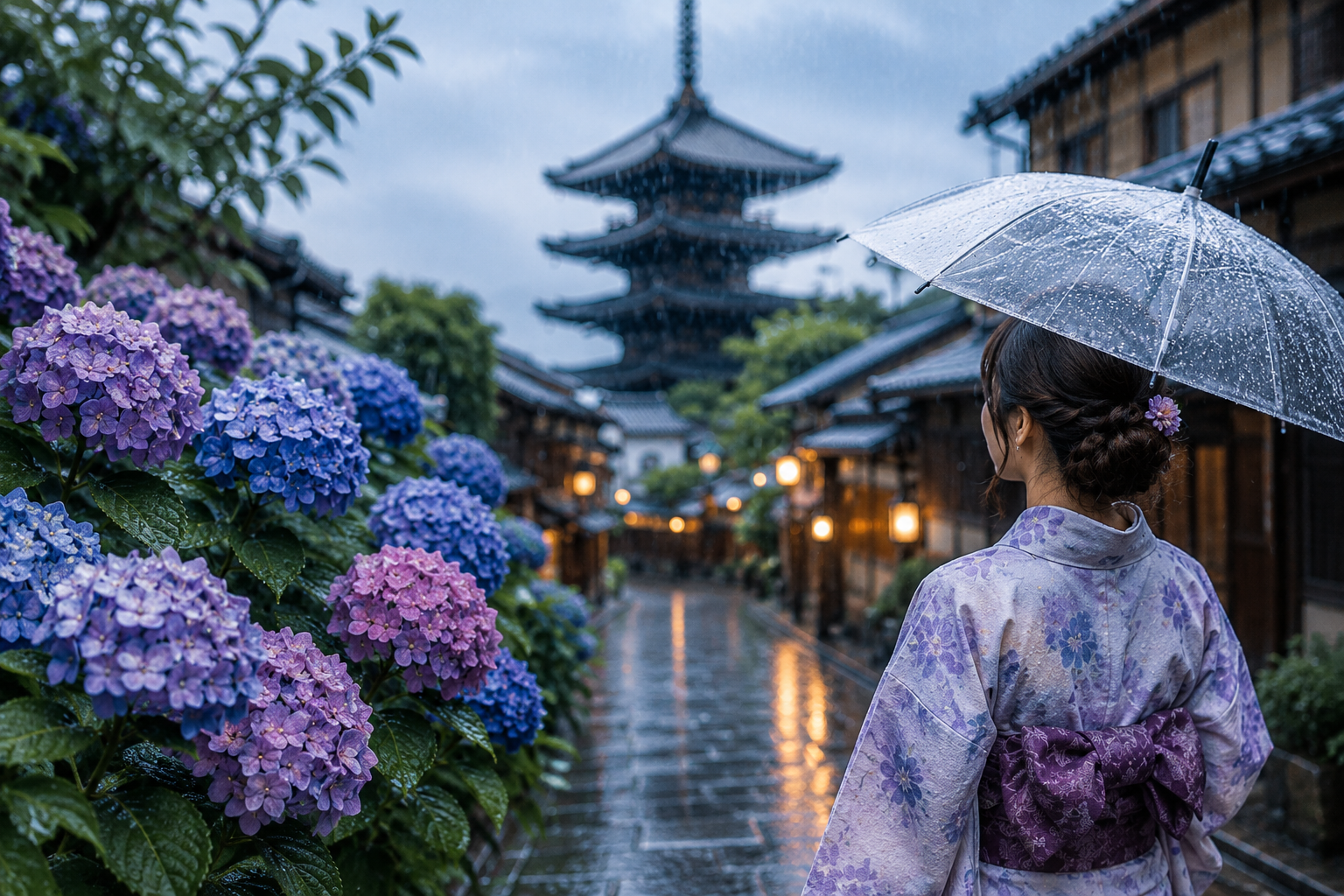
During this time, gardens become greener, rivers fill with fresh water, and beautiful seasonal flowers such as hydrangeas bloom across the country.
When Is the Rainy Season?
The rainy season generally begins in late May or early June and ends around mid to late July, although the exact timing varies depending on the region and the weather each year.
Southern Japan usually enters the rainy season first, followed by central Japan and then northern regions.
One important exception is Hokkaido, Japan’s northernmost island.
Unlike most of the country, Hokkaido typically does not experience a true rainy season, making it a popular destination for travelers who want to avoid wet weather.
Because the timing changes slightly every year, checking the weather forecast before your trip is always recommended.
Does It Rain Every Day?
One of the biggest misconceptions about Japan’s rainy season is that it rains continuously for weeks.
Fortunately, that isn’t true.
Many days are cloudy with occasional showers, while others are completely sunny.
It’s common to experience rain for only a few hours before the weather clears up again.
Of course, there are periods of heavier rainfall, but they usually don’t last for the entire season.
Because of this, many travelers find that the rainy season has much less impact on their vacation than they originally expected.
Which Parts of Japan Have a Rainy Season?
Most of Japan experiences a rainy season, including popular tourist destinations such as:
- Tokyo
- Kyoto
- Osaka
- Hiroshima
- Fukuoka
- Okinawa
However, the amount of rainfall and the timing vary by region.
Okinawa usually enters the rainy season earlier than the rest of Japan and also finishes earlier.
Meanwhile, Hokkaido generally has no distinct rainy season, making it one of the best places to visit during June if you’re looking for drier weather.
Is June a Good Time to Visit Japan?
Many travelers avoid Japan in June because they worry about the weather.
However, June can actually be one of the most enjoyable times to visit.
Advantages
- Fewer tourists than during the cherry blossom or autumn leaf seasons.
- Hotels are often more affordable.
- Popular attractions are less crowded.
- Beautiful hydrangeas bloom throughout the country.
- Temperatures are generally comfortable before the intense summer heat arrives.
Disadvantages
- Occasional rain may affect outdoor sightseeing.
- Humidity can be quite high.
- You’ll probably need to carry an umbrella.
- Some outdoor events may be canceled due to weather.
If you don’t mind occasional rain, June can offer a quieter and more relaxed travel experience compared to Japan’s peak tourist seasons.
My Personal Advice
From my personal experience, I don’t think you should avoid visiting Japan just because it’s the rainy season.
Many first-time visitors imagine that it rains all day, every day for an entire month. However, that usually isn’t the case.
In fact, you’ll often find that it rains for only part of the day before the sun comes back out.
In recent years, Japan’s climate has changed noticeably, and to be honest, even many Japanese people no longer know exactly when the rainy season begins or ends.
It often feels like “the weather stayed cool for a while, and then suddenly it became unbearably hot.” Somewhere during that transition, the rainy season came and went.
Because of this, very few Japanese people actually pay close attention to the rainy season itself anymore.
That said, it is still true that this period generally brings more rainfall than other times of the year.
So, if your trip is mainly focused on outdoor activities—such as hiking, visiting scenic viewpoints, cycling, or spending time at beaches—you should keep the possibility of rainy weather in mind when planning your itinerary.
A Hidden Advantage of Japan’s Rainy Season
One of the biggest advantages of visiting Japan during the rainy season is that there are far fewer tourists than during peak travel seasons.
Popular attractions that are usually crowded during the cherry blossom or autumn leaf seasons often become much more comfortable to explore.
You’ll spend less time waiting in lines, hotels are often more affordable, and famous sightseeing spots feel more relaxed.
The rainy season also creates beautiful scenery that many visitors never get to experience.
Traditional Japanese gardens become incredibly green, rivers and forests look fresh, and hydrangeas bloom across the country.
Some temples in Kyoto are especially famous for their hydrangea gardens, making June one of the most beautiful months for photography.
For many photographers, the combination of traditional temples, quiet streets, and gentle rain creates a uniquely Japanese atmosphere.
Best Places to Visit During the Rainy Season
Rain doesn’t have to ruin your trip—it simply changes the type of places you’ll enjoy.
Some of the best destinations during the rainy season include:
- Traditional temples and shrines
- Museums and art galleries
- Shopping districts
- Japanese gardens
- Aquariums
- Observation decks
- Hot spring resorts (Onsen)
- Cafés with scenic views
Kyoto is particularly beautiful during the rainy season.
Many temples become quieter than usual, and the combination of rain, moss-covered gardens, and historic wooden buildings creates a peaceful atmosphere that many locals actually prefer over the busy spring and autumn seasons.
Travel Tips
If you’re visiting Japan during the rainy season, these simple tips can make your trip much more comfortable:
- Carry a small folding umbrella.
- Wear waterproof shoes if possible.
- Bring a light rain jacket.
- Check the weather forecast each morning.
- Plan a mix of indoor and outdoor activities.
- Keep your camera or phone protected from rain.
- Don’t let a little rain change your entire itinerary.
Most rainy days are still perfectly suitable for sightseeing.
Final Thoughts
Japan’s rainy season often sounds much worse than it actually is.
Although you’ll probably encounter some rain during your trip, it rarely rains continuously for weeks.
With a little preparation, the rainy season can actually become one of the most relaxing and enjoyable times to visit Japan.
Fewer crowds, lower hotel prices, lush green landscapes, and beautiful seasonal flowers all make this season surprisingly rewarding.
If you’re visiting Japan between late May and July, don’t let the words “rainy season” discourage you.
You may discover a quieter, greener, and more authentic side of Japan that many tourists never experience.