
Introduction
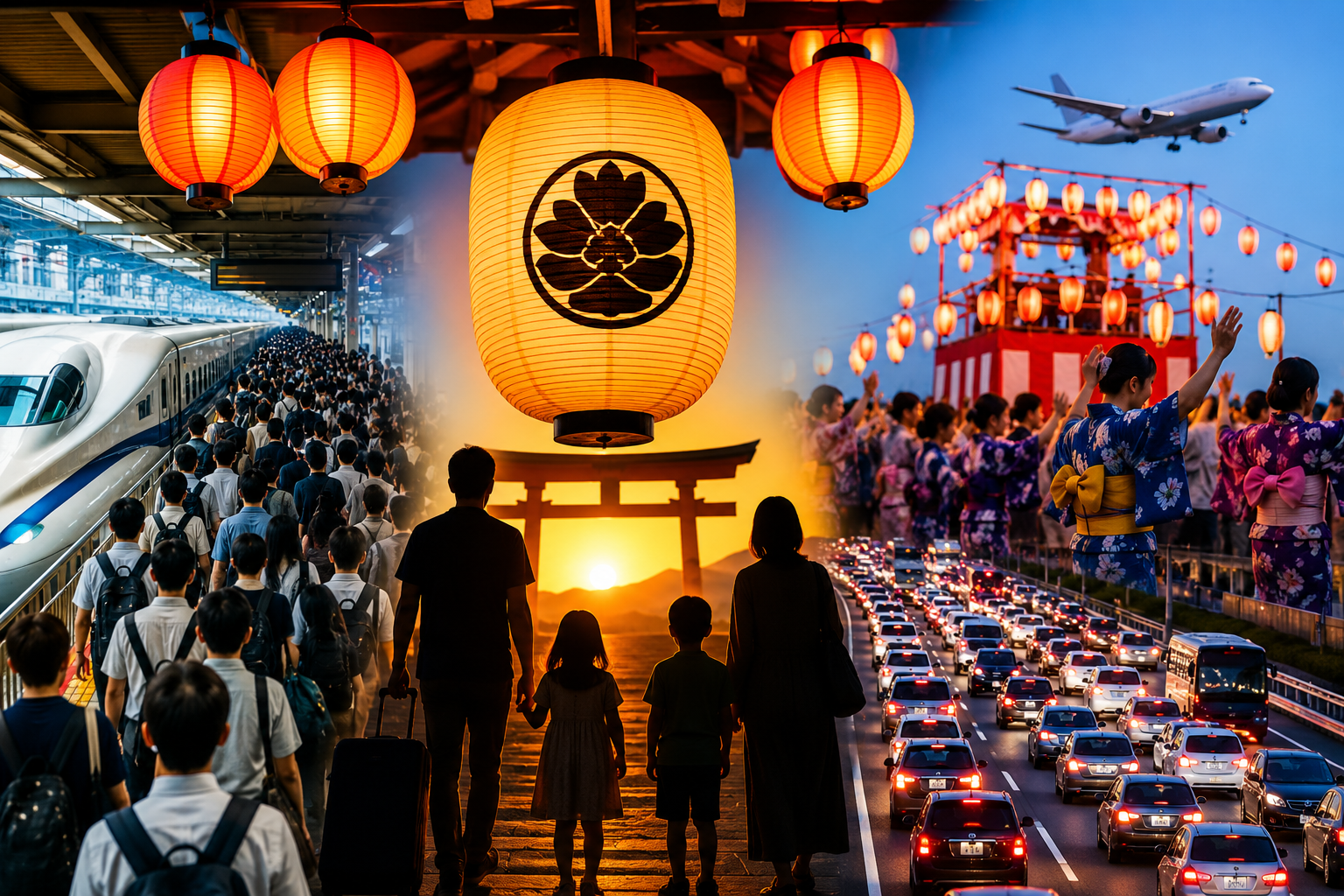
If you’re visiting Japan in August, you may notice that train stations are unusually crowded, highways are packed with traffic, and some shops or restaurants are temporarily closed.
You might be wondering:
“What’s happening in Japan?”
The answer is Obon (お盆), one of Japan’s most important traditional holidays.
Obon is a time when many Japanese people return to their hometowns to spend time with their families and honor the spirits of their ancestors.
If you’re planning to travel around Japan during this period, it’s helpful to understand what Obon is and how it may affect your trip.
What is Obon?
Obon is a traditional Buddhist holiday celebrated throughout Japan.
According to Japanese tradition, the spirits of ancestors return home during this period to reunite with their families.
People visit family graves, offer prayers, light lanterns, and spend time together.
Although Obon is a religious tradition, many Japanese people celebrate it regardless of their religious beliefs because it is deeply rooted in Japanese culture.
When is Obon in 2026?
In most parts of Japan, Obon will be observed around:
August 13–16, 2026
Many companies also give employees several days off, making it one of the busiest travel periods of the year.
Some Restaurants and Bars May Also Close Before or After Obon
As a result of the Obon holiday, you may also find that some restaurants, bars, and other local businesses close for a few days before or after the main holiday period.
For example, the bar where I work was closed on August 11, 12, and 13 for our Obon holiday.
Many businesses choose to take time off just before the busiest days of Obon because they expect a large number of customers between August 13 and August 16. After reopening, they prepare for one of the busiest periods of the year.
This means that if you’re traveling in Japan around Obon, don’t be surprised if some local restaurants or bars are temporarily closed, even outside the official holiday dates.
Why Are Trains and Airports So Crowded?
In Japan, most job opportunities are concentrated in major cities such as Tokyo and Osaka. Because of this, many people who grew up in rural areas move to big cities for work.
Obon is the time of year when these people return to their hometowns to spend time with their parents, grandparents, and relatives.
This is why millions of people travel across Japan during the Obon holiday.
Of course, many companies also give their employees several consecutive days off. As a result, people who don’t have a hometown to return to often take advantage of the holiday by traveling elsewhere in Japan or overseas.
As a result:
- Shinkansen trains become fully booked.
- Airports are extremely busy.
- Highways experience heavy traffic.
- Tourist attractions become more crowded than usual.
If you’re planning to travel long distances during Obon, booking transportation well in advance is highly recommended.
Why Are Some Shops Closed?
Unlike Golden Week, most tourist attractions, convenience stores, and major shopping areas remain open during Obon.
However, you may find that:
- Family-owned restaurants are closed.
- Small local businesses take holidays.
- Some museums or attractions have special schedules.
Popular tourist areas such as Tokyo, Kyoto, and Osaka usually continue operating as normal.
Is Obon a Good Time to Visit Japan?
Yes—but it depends on your travel style.
Advantages
- Experience authentic Japanese traditions.
- Seasonal festivals are held throughout the country.
- Beautiful summer atmosphere.
- Many cultural events take place during the holiday.
Disadvantages
- Higher hotel prices.
- Crowded transportation.
- Popular attractions become busy.
- Reservations are more difficult to secure.
If you don’t mind crowds, Obon can actually be one of the most exciting times to visit Japan.
My Personal Travel Advice
If you’re planning to visit Japan during Obon, my personal recommendation is to travel to your destination before the holiday begins and stay there until Obon is over.
The biggest mistake you can make during Obon is spending your vacation traveling between cities. Transportation becomes extremely crowded, meaning you’ll likely spend more time, money, and energy than necessary.
If possible, avoid long-distance travel by Shinkansen or domestic flights during the holiday.
In particular, be prepared for extremely heavy crowds on August 13, when Obon begins, and August 16, when many people return home.
Why Obon Is Even Busier Than Golden Week
Many people who work in industries such as restaurants, hotels, and other hospitality businesses are unable to take long vacations throughout most of the year because of their work schedules.
For many of them, Obon and the New Year’s holiday are the only times they can enjoy an extended break.
Because of this, the number of people traveling during Obon is on an entirely different scale compared to other Japanese holiday periods, including Golden Week.
If you’re planning to visit Japan during Obon or the New Year’s holiday, it’s worth taking extra time to plan your itinerary carefully. These are two of the busiest travel seasons in Japan, and transportation, accommodations, and popular tourist attractions can become extremely crowded.
This is one of the reasons why many experienced travelers consider Obon to be the most challenging holiday period for traveling around Japan.
Traditional Obon Events
During Obon, many regions hold traditional events, including:
- Bon Odori (traditional dance festivals)
- Lantern ceremonies
- Fireworks festivals
- Toro Nagashi (floating lantern ceremonies)
- Gozan Okuribi in Kyoto
These events offer visitors a unique opportunity to experience Japanese culture.
Travel Tips
- Reserve Shinkansen tickets as early as possible.
- Book hotels well in advance.
- Expect longer waiting times at tourist attractions.
- Carry cash when visiting local festivals.
- Stay hydrated, as August is one of Japan’s hottest months.
Final Thoughts
Obon is much more than just a holiday.
It is a special time when families gather, traditions are passed down, and people remember those who came before them.
Although transportation and tourist attractions can become crowded, visiting Japan during Obon also gives you the chance to experience one of the country’s most meaningful cultural traditions.
Although transportation can be challenging, there is one unexpected advantage.
Because millions of people travel to different parts of Japan, the population becomes more spread out across the country. In some cities, this can actually make sightseeing more comfortable than usual.
In rural areas especially, many people return home for Obon, bringing more energy and activity to local towns. Shopping streets, restaurants, and entertainment districts often feel livelier than they do during the rest of the year, giving visitors a chance to experience a different side of Japan.
For travelers who don’t mind planning ahead, Obon can actually be one of the most fascinating times to explore the country.
If you’re traveling to Japan in mid-August, understanding Obon will help you enjoy your trip and better appreciate Japanese culture.